
The National Radon Action Plan
The National Radon Action Plan (NRAP) is a strategy anchored by the U.S. Environmental Protection Agency (EPA) to increase action on radon. The NRAP Leadership Council unites different perspectives on the challenge of finding and fixing preventable radon exposures. The Leadership Council has sustained its collaboration to guide national radon action since 2015.
Several key themes are central to the NRAP, including:
- A commitment to enhancing occupant protections, including building codes
- Leveraging available sources of funding and recognizing opportunities to seek additional funding for testing and mitigation.
- Building capacity for effective radon service delivery systems
- And finally, a commitment to address disparities in radon risk reduction.
The NRAP Leadership Council invites leaders who are serious about saving lives, building in health protection where we live, work, and learn; eliminating preventable disease; and realizing a high return on investment in a healthier future to support the NRAP.
A NATIONAL PLAN TO SAVE LIVES
A national effort is underway to implement strategies for preventing lung cancer deaths annually by reducing high radon levels in homes, apartments, schools, and childcare centers. Representatives of federal agencies, state and tribal radon programs, nonprofit organizations, and the radon services industry have worked together to develop and implement this coordinated plan to reduce radon risk.
The National Radon Action Plan: A Strategy for Saving Lives sets out strategies to drive the changes needed to reduce exposure to radon. Strategies include requiring radon testing and reduction systems as a standard practice in housing finance and insurance programs, and institutionalizing radon risk reduction through building code requirements.
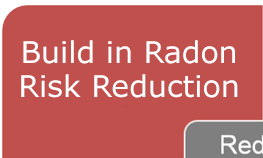
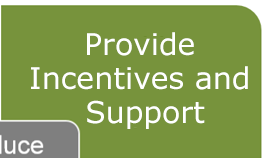
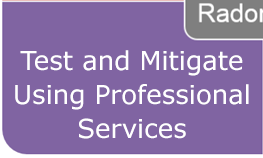
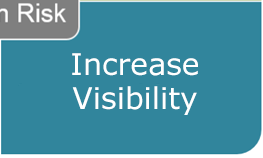
The 2025 strategies in the National Radon Action Plan (NRAP) reflect the strongest potential to effectively reduce radon risk through institutionalizing risk reduction. The coalition of NRAP members has formed committees to execute all strategies, with a particular focus on those strategies most likely to result in systems change. Building on the framework for planning action that the federal government had started, the four key strategies in the NRAP are the following (Click on the links below to see progress on this work.):
- Build in radon risk reduction: Approaches that embed radon risk reduction as standard practice across the entire housing sector.
- Provide incentives and support for radon risk reduction: Approaches that motivate individuals to pay for testing, mitigation, and radon-resistant construction with financial encouragement and provide direct financial support for radon testing and risk reduction for people who cannot pay.
- Test and mitigate using professional radon services: Approaches that promote the use of certified radon services and help to build demand to sustain a high-quality industry.
- Increase visibility: Approaches that garner broad public attention for the radon issue and demonstrate the importance of radon risk reduction.
The NRAP builds on the work of the Federal Radon Action Plan adopted in 2011. Under that plan, federal agencies made several key steps using available authority and resources to advance the battle against radon. Key federal partners leading the way in the National Radon Action Plan are the U.S. Environmental Protection Agency, U.S. Department of Housing and Urban Development, and the U.S. Department of Health and Human Services, including the Centers for Disease Control and Prevention. Nine national organizations are also active leaders in the NRAP: American Lung Association, which heads the Leadership Council; American Society of Home Inspectors; Cancer Survivors Against Radon; Children’s Environmental Health Network; Citizens for Radioactive Radon Reduction; Conference of Radiation Control Program Directors; Environmental Law Institute; Indoor Environments Association |, and National Center for Healthy Housing.
En Español - El plan nacional de acción contra el radon
- HUD Officially Published Its Departmentwide Radon Policy
- ALA Released "Advancing Health Equity in Radon Risk Reduction"
- ALA Published State Credentialing Programs for Radon Services
- ALA and NCHH Release Policy Brief: Radon Risk Reduction Strategies in Rental Housing
- HUD Updates the Radon Requirements for Multifamily Housing
- ICC Members Reject Sidewall-Venting. Approve Radon Testing Requirement
- RRNC Published in 2018 International Green Construction Code
- Connecticut Adds RRNC to Statewide Building Codes
- IEA Develops Policy Alert on Radon Proposals for the ICC Code Hearings
- EPA Proposes Changes to IBC and IRC
- Proposed Conference/Forum to Address Radon and Risk Management within the Housing Sector
- State Radon Resistant New Construction Laws (2017)
Provide Incentives and Support for Radon Risk Reduction
- ALA Shares New Resources for Working with Cancer Coalitions
- HUD Awards $6 Million to Improve the Safety and Health of Homes of Low-Income Families
- Addressing Radon in the Environmental Review Process; Request for Comment
- FY 2022 Radon Testing and Mitigation Demonstration for Public Housing NOFO
- Establishing and Running a Local Home Repair Program: A Technical Assistance Tool
- HUD Awards $4 Million to Public Housing Agencies to Protect Families from Potential Exposures to Radon
- HUD Announces $4 Million Radon Testing Notice of Funding Opportunity
- Habitat for Habitat to Update Construction Standards
- PA to Test 200 Homes in Low-Income Communities
- Connecticut Establishes New Healthy Homes Fund
- HUD Funds New Study for Testing Multi-family Housing
- NRAP Meetings Include Discussion on Federal Grant Opportunities
Test and Mitigate Using Professional Radon Services
- ALA Released Policy Backgrounder on Tracking Radon Data to Save Lives
- EPA's Proposed Radon Credentialing Criteria
- Radon Standards of Practice
- Rules of Professional Practice
- Information Session: Proposed Radon Credentialing Criteria
- HUD Hosts Live Session on "Addressing Radon in the Environmental Review Policy"
- ALA's Radon Testing in Schools Webinar
- CDC's National Radon Action Month (NRAM)
- Radon Test Kit Distribution Programs: Best Practices for State and Tribal Radon Programs
- Radon in State Cancer Action Plans: Best Practices for State and Tribal Radon Programs
- Radon in Schools: EPA Tools for Schools and Case Studies
- Radon Standards Update for AARST Members and NRPP-Certified Professionals
- Labs Submit Radon Data to CDC
- Guide for Health Care Providers
- EPA’s Radon Protection in New Homes Webinar
- EPA and IEA Host Webinar “Radon in Schools”
- Radon Warning Included in Kentucky Seller Disclosure Documents
- CDC Webinar: Initiatives to Reduce Radon-Induced Lung Cancer
- Study Finds Radon Education Increases Testing
- Update on Tribal Radon Work
- Increasing Radon Strategies in Cancer Control Plans
- NRAP Outreach Efforts
- Medical and Health Groups Endorse the National Radon Action Plan
PRIOR PLANS AND REPORTS
Read NRAP|2021-25 to learn more about the NRAP Leadership Council's goal areas, strategies for action and target outcomes.
En Español - El Plan Nacional de Acción contra el Radón 2021-2025
